UX RESEARCH
THE UNCANNY VALLEY IN DESIGN.
PROJECT OVERVIEW
This research is based off of the theories created by Trish Willard. Mrs. Willard rehashed Masahiro Mori's Uncanny Valley theory and contrasted its likeness to other design fields. Masahiro Mori's originally Uncanny Valley theory generalized the human person's instinctual distastement towards a robots resemblance towards humans. Trish Willard reimagined this graph to generalize a user's distastement towards an interface/experience resembling autonomous behavior. One note that should be known is that all of these features and actions were based off a decision and work of a designer(s), whose main objective is to create compositions for the likeness and empathy of the audience.
ABSTRACT
This presentation dwells upon the UX Uncanny Valley's disposition of functionality versus intuition.
DOWNLOAD RESEARCH SUMMARY PDF
RESEARCH
WHAT IS THE UNCANNY VALLEY?
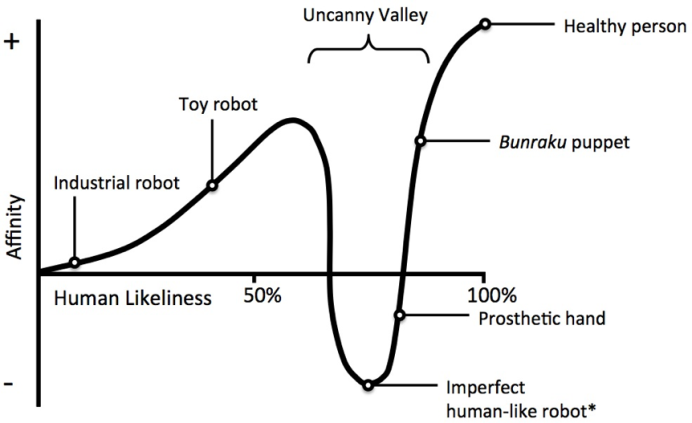
The Uncanny Valley is a graph that psychoanalyzes our affinity towards objects the more they begin to imitate our reality.
The dip describes our eeriness or disturbing feel that we have the more they resemble us.

UNCANNY VALLEY IN UX DESIGN
Many UX Designers are taught user (human) centered design to empathize and relate to their audience. As User-Centered Designers begin to make things easier for its users, it may potentialy remove the freedom of options that allow users to traverse.
EXPLORATORY RESEARCH
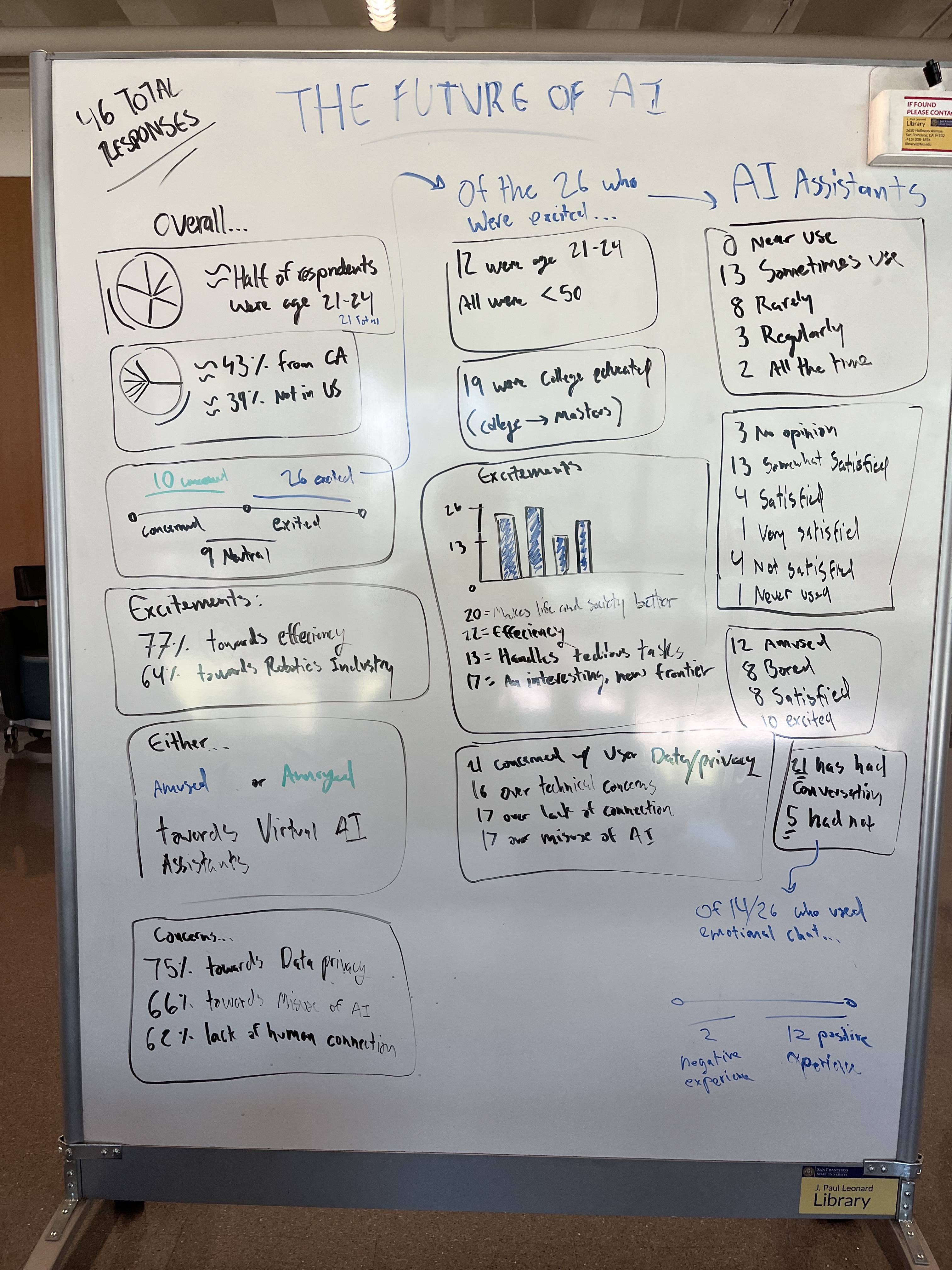
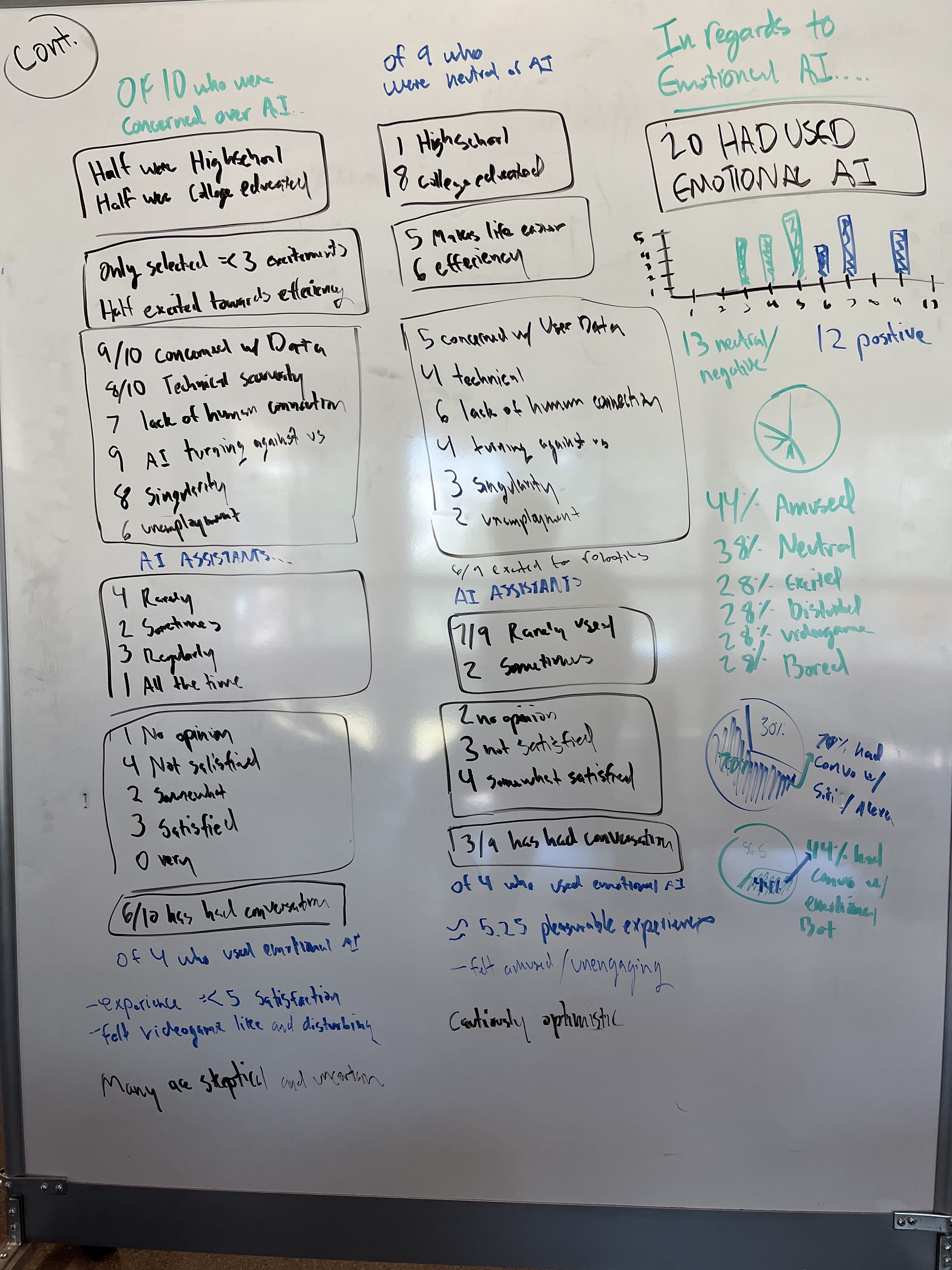
An anonymous survey was curated and received over 45 responses of everyone's particular feelings towards AI and the Future. With these responses I was able synthesize my research into 3 different categories.
Those who were looking forward to AI
Those who were not looking forward to AI.
Those who were neutral.